


Bridging the Gap
Have you heard of blockchain bridges but don’t fully understand what they are, why they are needed, and what types of bridges exist? Let’s figure it out!
To grasp the concept of a cross-chain bridge, let’s draw a parallel with a real-life scenario. Meet John, a savvy investor living in the United States. He currently holds investments in Treasury Bonds but desires to diversify his portfolio by purchasing Eurobonds – bonds issued by the countries of the European Union.
Now, how can John accomplish this? His most straightforward approach would be to open an account with a European bank and then purchase Eurobonds in euros through that bank. However, this option comes with specific problems and obstacles. Most likely, John would have to be physically present at the bank or use a proxy agent to open an account, making it a less convenient choice.
As an alternative solution, John can utilize the services of specialized funds in the United States. He can provide this fund with his capital, and they will then use his money to purchase Eurobonds through their established infrastructure. This way, John can purchase Eurobonds without undertaking the need to travel physically to Europe.
We encounter a similar situation in the DeFi world. As you may already know, numerous blockchains exist in the crypto space, including popular ones like Bitcoin, Ethereum, Polygon, Binance Smart Chain (BSC), and others. Each blockchain operates as a separate ecosystem with its unique rules, tokens, and protocols. This uniqueness of individual blockchains, while beneficial, also creates particular challenges.
The Challenge of Interoperability
Let’s consider a scenario where you need to transfer your tokens from the Ethereum blockchain to the Binance Smart Chain blockchain. If you were to send your funds to your BSC wallet from Ethereum directly, you would permanently lose your tokens. This happens because different blockchains don’t naturally communicate with each other due to their isolated ecosystems.
Intermediaries similar to the investment companies and specialized funds in Traditional Finance were created to overcome this challenge and enable seamless interaction between various blockchains. These intermediaries are known as cross-chain bridges.
Well, now let’s take a closer look at cross-chain bridges because these bridges are among the key figures in blockchain technology.
What is a Cross-Chain Bridge?
A cross-chain bridge is a fundamental tool that allows you to transfer tokens and assets from one blockchain to another. So, this tool provides seamless interoperability between two distinct blockchains. Think of it as a physical bridge connecting two islands, each representing a separate blockchain ecosystem.
Among the most prominent bridges as of the time of writing are Stargate, Polygon PoS Bridge, Binance Bridge, Avalanche Bridge, Celer cBridge, xDai Bridge, Hop, and Synapse.
Benefits of Cross-Chain Bridges
Cross-chain bridges play a significant role in the world of blockchain technologies, offering many advantages:
- Effortless Asset and Information Transfer: Cross-chain bridges facilitate the easy way to transfer funds and information between different blockchain ecosystems.
- DApp Development Across Blockchains: These bridges enable the creation and deployment of decentralized applications (dApps) in various blockchain networks.
- New Horizons for DeFi Explorations: DeFi users can seamlessly explore new opportunities and projects in the cryptocurrency realm, thanks to cross-chain bridges.
- Passive Income for DeFi Investors: By providing liquidity to bridges, DeFi investors can earn passive income on their investments.
- Promoting DeFi’s Growth: Cross-chain bridges play a pivotal role in driving the growth and development of the DeFi industry and the overall blockchain architecture.
Cross-chain bridges pave the way for the future of the blockchain space, fostering a more interconnected and versatile ecosystem.
Alternative Methods of Transferring Crypto
While cross-chain bridges are widely used for transferring assets and information between blockchains, it’s essential to note that there are other options available.
- Exchange Transfers: Users can transfer tokens between blockchains using cryptocurrency exchanges. This involves depositing the token on an exchange in one blockchain and then withdrawing it to a different (desired blockchain). However, this method comes with potentially significant fees and risks associated with centralized exchanges. Moreover, there are few exchanges that support a large number of blockchains for the deposit and withdrawal of different tokens.
- P2P Transactions: Another option involves using peer-to-peer (P2P) transactions. Imagine a user on blockchain A requires USDT on blockchain B, while simultaneously, a user on blockchain B needs USDT on blockchain A. In this case, they can exchange the tokens, ensuring each party receives the USDT on the blockchain they need. However, a significant challenge arises in finding a suitable person to facilitate this exchange between tokens on different blockchains. The search process can take time, presenting a significant obstacle for users.
But increasingly, users are turning to cross-chain bridges due to their numerous advantages.
To gain a comprehensive understanding of these blockchain bridges, we need first to understand how these blockchain bridges work. So, let’s get started!
How Do Cross-Chain Bridges Work?
When it comes to facilitating asset transfers between blockchains, cross-chain bridges operate using two main methods: the “wrapped asset” method and the “liquidity pool” method. Both approaches serve the purpose of interoperability, allowing users to move their assets seamlessly across different blockchain networks. Let’s delve into each method to understand how they function.
"Wrapped Asset" Method
Imagine you have Wrapped Ethereum (WETH) on the Ethereum blockchain and want to transfer it to the Optimism blockchain. When using a cross-chain bridge with the “wrapped asset” method, your WETH on Ethereum will be locked or “frozen” within the bridge’s smart contract, while an equivalent amount of WETH will be issued or minted on the Optimism blockchain.
For instance, if you then decide to bridge a portion of your WETH from Optimism back to Ethereum, part of WETH on Optimism will be “burned,” and an equivalent amount of WETH on the Ethereum blockchain will be unlocked from the bridge’s smart contract and sent to your Ethereum wallet. A well-known example of a bridge operating on this principle is the xDai Bridge.
"Liquidity Pool" Method
Another method utilized by cross-chain bridges like Stargate and Synapse involves using liquidity pools. Bridges employing this method work in the following manner: When users want to bridge their WETH from Ethereum to WETH on Optimism, they first send their WETH to the platform’s smart contract. The smart contract then transfers the required amount of WETH, taken from the bridge’s WETH liquidity pool on Optimism, to the user’s Optimism wallet.
You might wonder where the bridge obtains the funds necessary to execute these exchanges. As previously mentioned, blockchain bridges of this type function similarly to Swap platforms, utilizing liquidity pools, which are like reservoirs with funds. These liquidity pools present unique opportunities for DeFi investors for the so-called “liquidity mining.” Investors can contribute their funds to the liquidity pools of the platform and, in return, receive income from the bridge. This profit, in turn, is generated as a part of the fees that the bridge charges its users for performing transactions. The platform then utilizes the funds pooled by investors to facilitate bridge swaps between different blockchains.
The platform must have at least two liquidity pools available to make the token exchange process discussed in our previous example possible. The first one holds WETH on the Ethereum blockchain, which receives the funds sent by the user for bridging. The second liquidity pool has WETH on the Optimism blockchain, from which the platform withdraws the required amount to send to the user`s wallet on this blockchain, completing the operation.
Using the Stargate website as an example, which is a famous blockchain bridge, you can observe liquidity pools. These pools consist of tokens that the platform supports for bridging between different blockchains. Additionally, it presents an opportunity for investors to participate in these pools and earn a commission charged to Stargate users for bridge transactions.
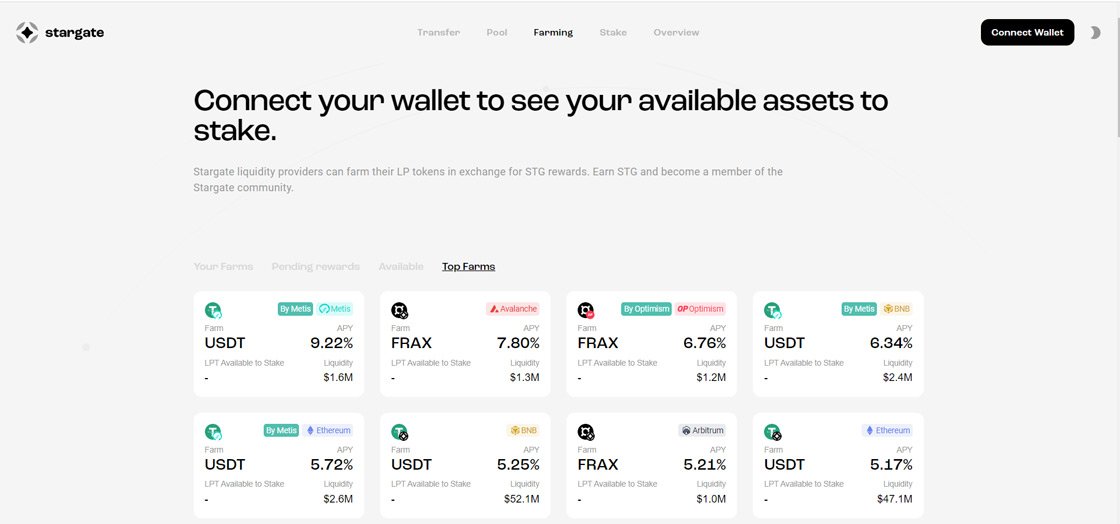
Taken from Stargate
By now, you have understood the various methods that cross-chain bridges employ to enable token transfers between blockchains. However, there is yet another classification of bridges that needs closer examination.
What are the Types of Crypto Bridges?
Crypto bridges can be classified based on their operational methods, such as the “wrapped asset” and “liquidity pool” approaches. Additionally, bridges can be categorized by the level of security and trust they offer – trusted and trustless cross-chain bridges.
Trusted Blockchain Bridges
Trusted (centralized or custodial) cross-chain bridges are operated and controlled by centralized organizations or entities. A prime example of a trusted bridge is the Binance Bridge. When utilizing a trusted bridge, users rely on the reputation and reliability of the centralized entity managing the bridge. One drawback of trusted bridges is that they often require users to undergo identity verification, which may deter some individuals concerned about privacy.
However, trusted bridges have their advantages. They generally offer low fees and fast transactions due to their centralized nature. These features make trusted bridges appealing to users who prioritize cost-effectiveness and swift asset transfers.
Trustless Blockchain Bridges
In contrast, trustless (decentralized or non-custodial) cross-chain bridges operate without the control or involvement of third-party organizations. Instead, transactions on trustless bridges are executed automatically through algorithms and smart contracts. As a result, only the users involved in the transaction and the smart contract on the respective blockchain have access to the funds, ensuring a higher level of security and autonomy.
The decentralized nature of trustless bridges ensures that users have complete control over their assets and transactions, aligning with the principles of decentralization and privacy that are integral to the blockchain ecosystem. However, trustless bridges may not always offer the same level of fees and transaction speed as their centralized counterparts.
Trustless bridges are frequently utilized within the DeFi sector, where users value the ability to manage their funds independently and prioritize the security of their transactions. On the other hand, trusted bridges find favor with users who seek cost-efficiency and rapid transaction processing.
What are the Risks of Cross-Chain Bridges?
Both types of cross-chain bridges, trusted and trustless, have vulnerabilities that investors need to be aware of. This section will delve into the potential risks associated with each type of crypto bridges.
Risks of Trusted Bridges
Let’s begin by examining the risks associated with centralized, trusted bridges.
Rug Pull Risk
One significant risk with trusted bridges is the possibility of a “Rug Pull.” This type of scam occurs when platform founders build their projects, gain a positive reputation among users, attract substantial investments, and then suddenly close the platform or disappear with investors’ funds. While this problem is more commonly associated with trusted bridges, it is essential to recognize that it can also happen occasionally with trustless bridges.
Censorship Risk
As you already know, centralized organizations manage trusted bridges. Consequently, there is always a certain probability that your transaction may be blocked by the bridge’s validator group or the centralized authority responsible for its operation.
Risks of Trustless Bridges
Although operating on smart contracts and algorithms, trustless bridges also have risks.
Smart Contract Risk
Since trustless bridges use smart contracts, many platforms openly share the code of their smart contracts to demonstrate protocol transparency. However, attackers may exploit this openness by searching for bugs or weaknesses in the smart contract code. If they exploit the platform’s smart contract, they get access to the funds of the platform’s clients. The scale of bridge hacks in DeFi is evident from data provided by DeFiLlama, where a total of $5.44 billion worth of crypto assets have been stolen from various platforms, with $2.66 billion stolen from trustless bridges alone.
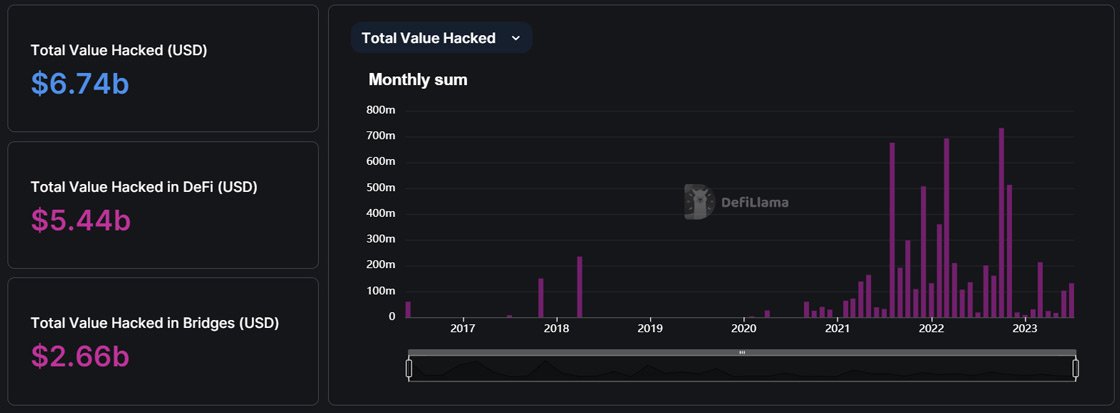
Taken from DeFiLlama
Technology Risk
Trustless bridges also face a broad spectrum of risks related to technology. Attackers may create phishing replicas of the official websites of trustless bridges to deceive users and steal their funds. Additionally, various errors can occur at the blockchain level or within the smart contracts and bridge platform algorithms.
Important Things to Consider
When utilizing a cross-chain bridge for your crypto investments, it’s crucial to recognize that apart from the risks associated with the platform itself, you must consider other significant factors. While these factors may not directly endanger your funds, they are vital when using a bridge. Let’s delve into these essential considerations.
1) Transaction Routes. When utilizing cross-chain bridges for asset transfers, ensuring that the chosen bridge fully supports the specific tokens and blockchains required for your transactions becomes crucial. Not all cross-chain bridges are universally compatible with every cryptocurrency and blockchain. Therefore, it is essential to verify your selected option accommodates the assets.
Even if the assets you wish to transfer are supported, you may still encounter some issues if the bridge lacks a viable transaction route. For example, attempting to exchange 100 USDC on Avalanche for 100 USDC on the BNB chain using Synapse could prompt a message in the bottom right corner stating that Synapse found no route, ultimately preventing the transaction from being completed, despite the bridge supporting both tokens and blockchains in general.
If you encounter any difficulties while bridging funds, it is better to use a different bridge, or choose a different token pair, in order to complete the exchange process and not lose your crypto assets.

Taken from Synapse
2) Token’s Contract. When you want to bridge tokens between different blockchains, making sure the destination token’s contract is correct is really important.
Let’s make this easier to grasp with an example using Synapse. Imagine you have USDC on Binance Smart Chain and you want to bridge it into USDC on Avalanche. When you pick the token you want to get on Avalanche after the bridge process, you’ll see something like the picture below.

Taken from Synapse
On Avalanche, there are two types of USDC: USDC.e and regular USDC. While they both represent the same currency, they have different token addresses. So, it’s not just about the name of the token; you need to know exactly which one you’re getting – USDC or USDC.e. If you get the wrong one by mistake, you’ll have to figure out where to swap it for the right token. This can be a bit tricky.
Therefore, in order not to make a mistake while bridging, you just need to be cautious (double-check the name of the token and its contract) and know exactly what kind of token you need to receive.
However, there are also cases when the bridge may not correctly indicate which token you will receive after bridging. This situation can be observed on Stargate, for example. Among the supported stablecoins, only USDT and USDC are available for receiving on Avalanche.
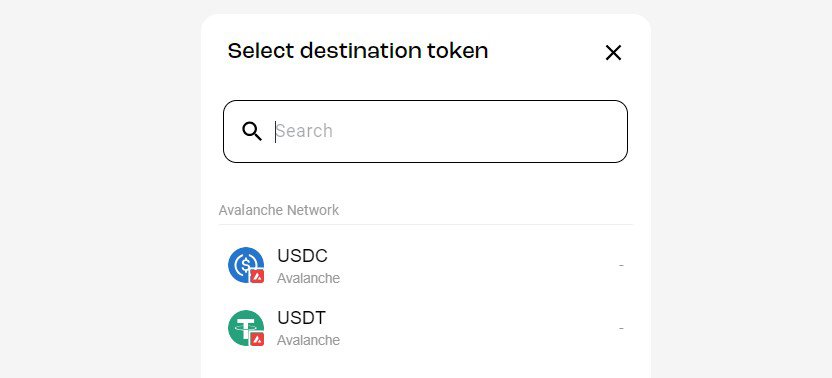
Taken from Stargate
And there is no way to check the contract or make sure that you don’t receive some other token (for instance, USDC.e instead of USDC). What should you do then?
In this case, you could make a test transaction through the bridge with a small amount of crypto and see what you get. If the result aligns with your expectations, you can proceed with a full transaction for the required amount. However, if you’re dissatisfied with the outcome, you have the option to select a different token pair or explore alternative bridge services.
So, skipping this important step could make you receive the wrong token. Then you’d have to do the process again, which means paying extra fees. So, be careful and double-check everything to avoid these kinds of costly slip-ups.
3) Liquidity. Even if you have chosen the suitable contract for the token you need and the blockchain bridge you want to use has found a route for the transaction, that’s only a part of it. Check if the bridge has enough liquidity to facilitate the transfer between the tokens and blockchains you require. If there is low liquidity in the pools on the destination blockchain that will be used for your bridging process, it could lead to delays or higher transaction fees, as the bridge may need to search for multiple liquidity sources to complete the transaction.
If the bridge doesn’t have sufficient liquidity, you might not receive the actual tokens you were expecting. Instead, you could end up with IOU tokens, which are short for “I Owe You.” These IOU tokens work like a promise that you’ll eventually get the real tokens when there’s enough liquidity. This means you’ll need to wait for a while (and waiting could take some days or even months), or you could opt for a different blockchain that does have enough liquidity to successfully bridge these tokens into real one’s. However, remember that using a different bridge comes with an extra cost.
So, conducting thorough research on the bridge you intend to use is crucial. To aid in this process, we have a separate article that outlines how to perform analysis on a platform before utilizing its services, which you can find here.
Final Thoughts
In conclusion, each blockchain is a separate financial system, each operating with its unique set of rules, tokens, smart contracts, and platforms. Innovative solutions have been developed to facilitate seamless interaction between these isolated ecosystems – cross-chain bridges, also called blockchain bridges.
Cross-chain bridges can be classified into two main categories based on their method of operation: the “wrapped asset” method and the “liquidity pool” method. Additionally, they can be differentiated by the levels of security and trust they offer – trusted and trustless bridges. These bridges are a crucial piece of the puzzle for efficiently transferring assets and information between blockchains without incurring any loss or disruption.
However, it is essential to acknowledge that while bridges offer a viable solution to transfer funds among different blockchains, they have risks. Some potential risks associated with cross-chain bridges include Rug Pull risks, the possibility of smart contract hacks, and other technological vulnerabilities. As a responsible investor, conducting thorough research before engaging with any bridge is crucial.
We sincerely hope that this comprehensive guide has been beneficial in helping you understand the significance and workings of cross-chain bridges. As a DeFi investor, staying informed and making wise investment decisions is essential.
Remember, at Chainfulness, you can easily manage your DeFi investments and explore new and exciting opportunities.
“Invest wisely!”